
Meet Alex Whittle
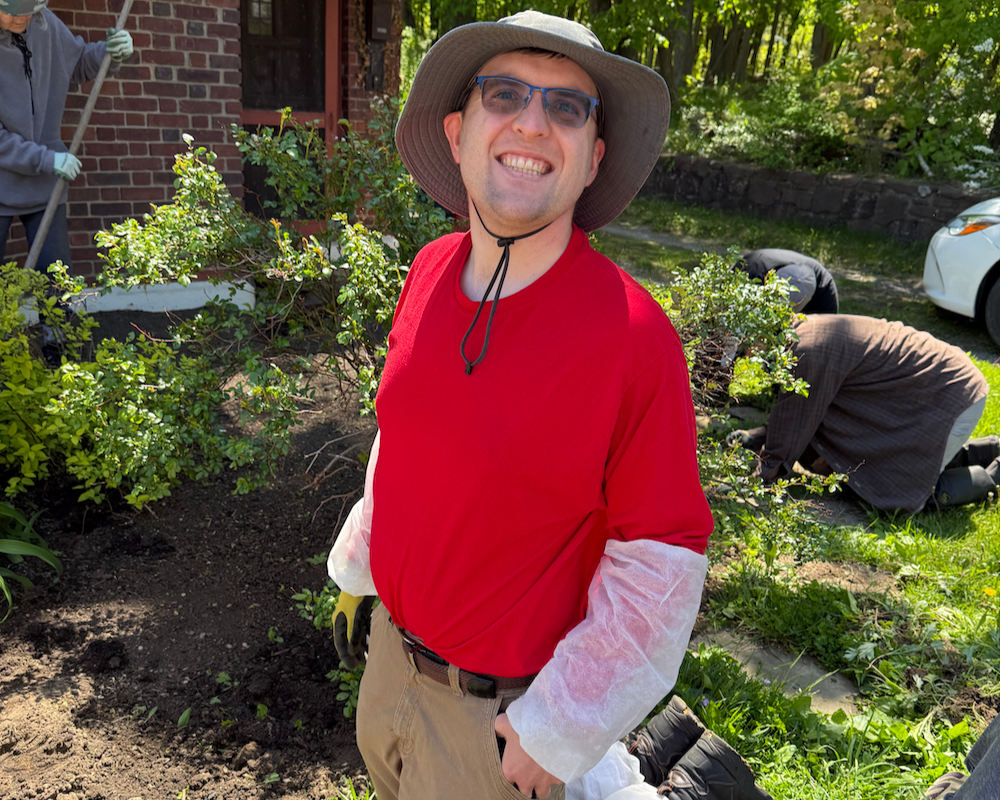
Alex first learned about the Group from his dad. He saw that we were looking for another environmental associate, and with his son’s background in biology research and environmental studies, he encouraged Alex to reach out. Not only has Alex become an integral part of our habitat restoration and conservation efforts, he has even gotten his father to volunteer for a few events!
Below Alex shares more about what he’s been working since he joined the Group at the beginning of the year…
What projects have you been working on? What stands out the most?
One of the biggest projects I have been working on is habitat restoration at Downs Farm Preserve, Skipper Horton Park, and Pipes Cove Preserve. We’re pulling out invasive plants like garlic mustard, mugwort, and mile-a-minute. We’re also planting native species, including milkweed and swamp rose mallow.
The other major project is identifying, labeling, and organizing the Group’s photo library. A lot of these photos are of plants and wildlife and before-and-afters of restoration projects. These include new photos taken by other staff and me.
It’s difficult to say which stands out more – I admire doing both! The photo project allows me to exercise my computer and organizational skills, whereas going out and doing restoration work allows me to be outdoors and see nature. I like both!
What were some of your favorite moments in the field?
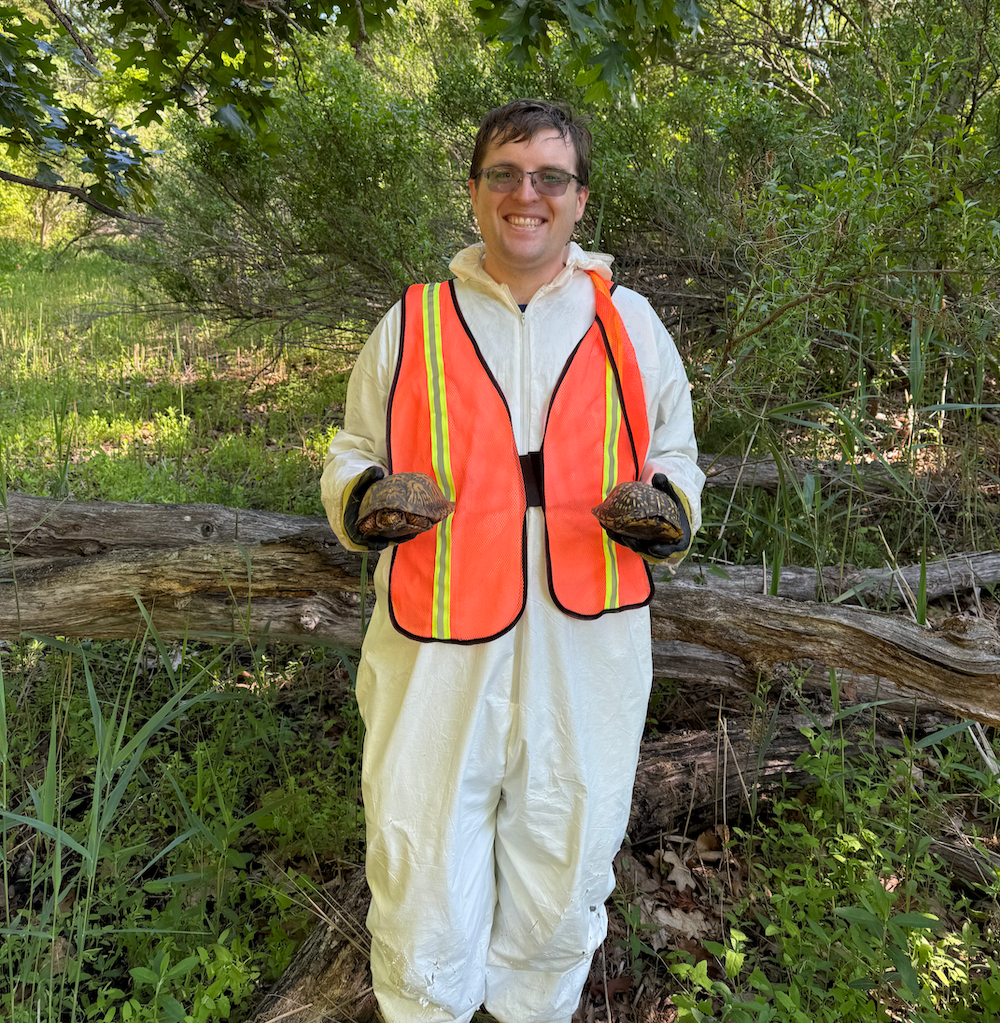
The box turtle survey was a major highlight. They were long days, but it was exciting to get into the brush to look for turtles. The first day I didn’t find any turtles but saw a lot of other wildlife. On the second day, I found two turtles back-to-back. I found two more through the rest of the surveys.
I also did the osprey project recently. That was fun— I searched for 11 nests and found six with ospreys present, most of which I did with my dad, which was very special. We have a database of osprey nests that are registered on ArcGIS with codes for their locations and coordinates. We travel out to those nests and observe what is happening. First we identify whether or not a nest has been built. Then we observe what the ospreys are doing in those nests and how many fledglings there are.
Finally, what I especially love about working with the Group is our informative and pleasant staff, who have accepted me for who I am, including my autism spectrum disorder.
What do you think people should know/understand about restoration and other projects you’re working on?
First, I would say that it takes a lot of work and commitment. Restoration work is ongoing, and it’s something that is best taken one step at a time. I would add that if you’re going outside to work, be prepared. Make sure you have your tools on you, proper clothing, sunblock, bug spray (especially due to tick-borne illnesses), and especially water. Stay organized and make sure you have snacks! Then you will be prepared to do the work.
Second, the primary goal of restoration is to prevent the loss of native species.
What do you enjoy most about being outdoors?
What I love most is traveling and seeing different natural spaces. My family has visited numerous famous national parks across the United States. I like experiencing new things and I especially love seeing the diversity of wildlife that there is in nature.